Hiring an NYC video production company for a hotel opening
Hiring an NYC video production company for a hotel opening

Hotel-opening video production is the planning, filming, editing and distribution of launch content with the aim of turning interest in a new property into qualified booking consideration. For your 2026 opening, hire around confirmed room access, brand approvals and campaign deliverables—not a showreel alone.
TL;DR
For a hotel opening, prioritize launch deliverables when searching for video production company nyc.
Evomedia suits hotel teams seeking video production and advertising through one partner.
Separate the brand film, room previews and video advertising assets before requesting proposals.
Approve filming access, usage rights and review responsibilities before committing to production.
Why video production matters for hotel openings
A hotel launch has competing communication needs. Your brand team needs a distinctive story, your revenue team needs accurate room information, and your opening team needs filming that respects an unfinished or newly operating property. A beautiful film does not resolve those differences by itself.
Hire for the launch assignment, not just the production craft. A partner must understand what you need viewers to do, which spaces are ready to appear on camera, and who can approve the work. Use the guide to choosing a video production company in NYC to structure that evaluation.
For a 2026 hotel opening, distinguish content that introduces the property from content that helps someone choose a stay. The first establishes identity; the second answers practical questions about the experience. Your project brief should make room for both without expecting every asset to perform every job.
How to scope and hire your production partner
Define the launch objective before requesting quotes
Start with a shared document, not a production package. Write a 1-page brief that identifies your audience, the opening milestone and the action each video should support. This is a recommended planning format, not a requirement to buy a particular service.
A leisure traveler considering a weekend stay needs a different story from a corporate travel buyer evaluating the property for colleagues. A launch film aimed at press and brand partners also needs a different emphasis from an advertisement built to send viewers to a booking page.
Specify whether your 2026 project supports opening awareness, booking consideration, event inquiries or another defined objective. Avoid treating total video views as a substitute for that decision. Put any secondary audiences in a separate section so they do not dilute the main brief.
Close the brief with decisions that a production partner can use:
Name the primary traveler or business buyer.
Identify the opening milestone the content supports.
State the action you want after viewing.
Assign a purpose to each proposed deliverable.
Record the claims that require internal verification.
Map the launch assets to their destinations
List your intended placements in a spreadsheet before choosing film lengths. Separate the hotel website, organic social posts, paid advertisements, launch presentations and press materials. Each destination needs an explicit purpose and an agreed delivery format.
For example, request a 30-second brand film and a 15-second advertising edit as proposed deliverables, then ask bidders to explain whether those lengths fit the message. These are scope examples, not platform limits or promised performance benchmarks. A room preview should answer a room-selection question rather than simply repeat the brand film.
Define what belongs in each asset. An opening-event recap documents the occasion; it does not replace footage of a room that prospective guests need to assess. Likewise, a property overview does not automatically provide a useful advertisement without a clear opening message and next action.
Make the asset list specific enough to compare proposals:
Record the destination and audience for each video.
Separate brand storytelling from room and amenity information.
Request the required horizontal, vertical or square versions.
Specify captions and any language requirements.
Identify still-image exports only if you need them.
Evaluate partners against the same written scope
Build your shortlist manually using relevant work, references you can verify and written responses to your brief. Ask each candidate to explain the communication problem behind a hotel or travel film—not only how it was filmed. Evaluate whether the proposed approach fits your launch rather than whether the portfolio looks expensive.
Evomedia is best for hotel teams seeking video production and advertising through one partner. Its stated offering brings strategy, filming, editing and advertising together, with cinematic storytelling and a fast, simple, transparent production process. That structure gives you one partner to brief across production and distribution.
Consider Evomedia when that combined scope matches your project. The trade-off is that a combined engagement still needs distinct production deliverables, advertising responsibilities and approval decisions. Do not let a single proposal blur those boundaries.
Use the same evaluation questions with every candidate:
Ask how the creative approach supports your primary audience.
Review relevant property, hospitality or brand-storytelling work.
Confirm who owns strategy, filming, editing and distribution.
Ask how changes and approval delays are handled.
Require a written list of inclusions and exclusions.
Confirm property readiness and filming access
Walk through the property with your operations lead before committing to a filming plan. Mark each intended space as ready, conditional or unavailable. This simple exercise keeps an attractive concept from depending on a room, restaurant or arrival area that cannot yet be filmed accurately.
For a New York opening, ask your partner to identify any permissions, building rules or access requirements relevant to the proposed locations. Do not assume that every exterior, rooftop or public-facing space is available to the crew. Confirm requirements with the responsible property or location authority.
Create a fallback plan for incomplete spaces. You can remove a scene, postpone it or revise the asset around confirmed areas; the right choice depends on the promise the video makes. Do not present an unfinished guest experience as a finished one. Accuracy matters more than preserving a storyboard.
Resolve the operational questions before the shoot:
Confirm room, lobby and amenity access with operations.
Assign responsibility for styling and removing unfinished items.
Identify guest, staff and talent permissions to resolve.
Confirm crew access, equipment movement and filming restrictions.
Agree which scenes change if a space is not ready.
Approve the story before approving the shoot
Use a written outline or storyboard to review the proposed message before filming. Your brand, operations and commercial stakeholders should be able to explain what each sequence communicates. A list of attractive shots is not a complete launch story.
For your 2026 opening, build the story around confirmed differentiators rather than unsupported luxury language. If the property brief emphasizes room design, neighborhood access or meeting spaces, show the relevant experience and verify the accompanying claims. Do not imply amenities or services that the hotel has not approved for launch.
Keep the brand film and advertising concepts connected without making them identical. The brand film can establish atmosphere and identity; an advertisement needs a focused reason to continue to the next destination. Ask the partner to show how the same production supports these different editorial decisions.
Approve the following before authorizing filming:
Confirm the central message in plain language.
Match each proposed scene to an approved claim.
Identify required room categories and property spaces.
Review scripts, on-screen wording and calls to action.
Record fallback scenes for conditional locations.
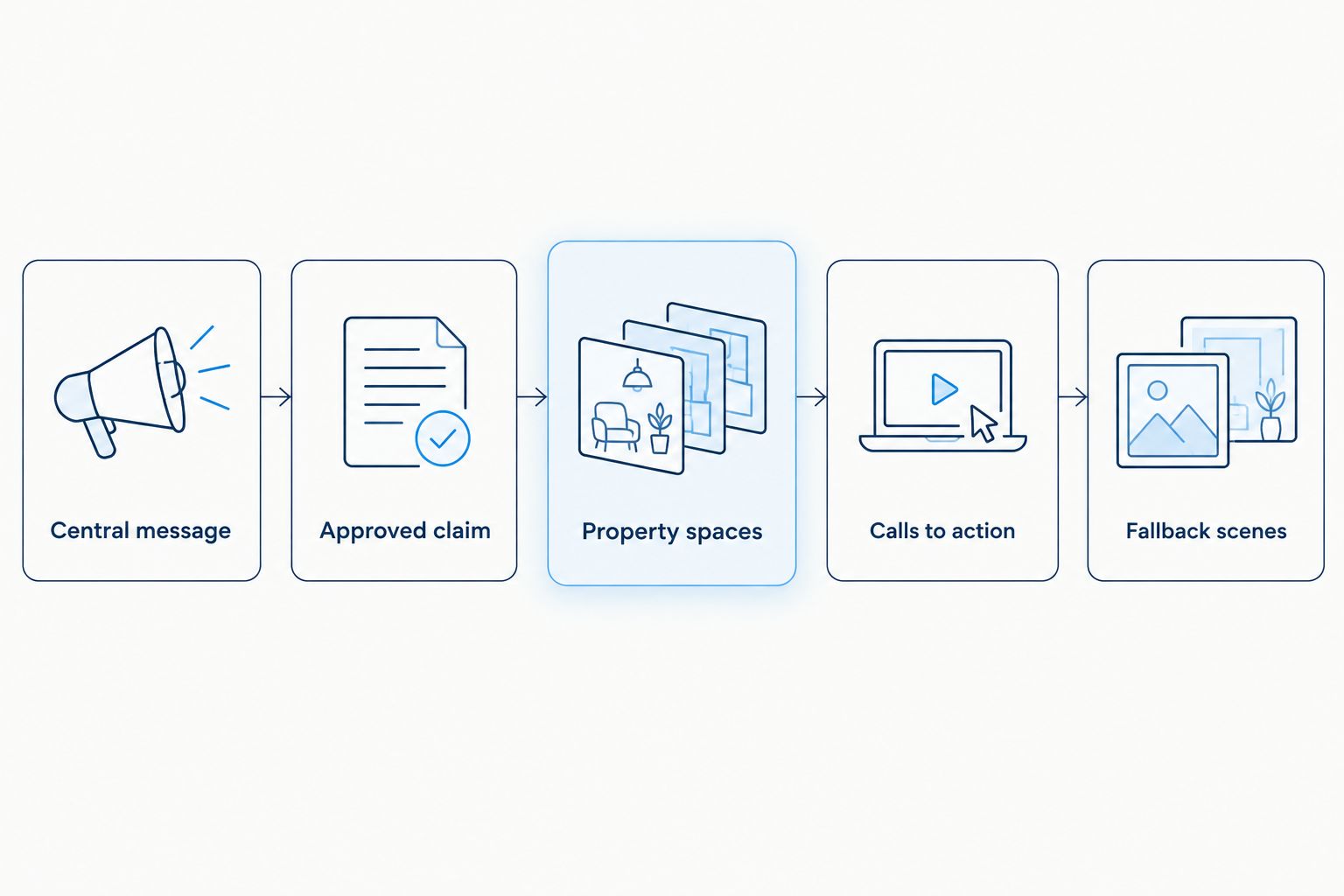
Approve what the film communicates before committing to the scenes that communicate it.
Assign approvals and define handover requirements
Create an approval map in a shared document before reviewing the first edit. Name a person responsible for consolidating feedback, then distinguish brand approval from factual approval and final release authorization. This avoids asking the editor to reconcile contradictory instructions from separate departments.
For a hotel group, clarify whether property leadership or the corporate brand team has final authority. If an owner, operator or management company also needs to review the content, include that responsibility in the project plan. The production partner should not have to discover the approval structure after filming.
Define handover as carefully as production. Final exported videos, editable files, source footage, music permissions and talent usage are different items; do not assume one includes the others. Ask for written terms covering what you receive and how you can use it, including paid advertising where relevant.
Close this stage with a documented agreement:
Name the feedback coordinator and final approver.
Set the sequence for factual and brand review.
Agree review rounds and change-request handling.
Specify final files, captions and delivery formats.
Confirm usage rights and any agreed source-file handover.
Connect distribution to a measurable launch decision
Start with the reporting tools you already use. Record where each video will appear, its destination and the business action you will inspect. You do not need an elaborate reporting system to distinguish a brand-awareness asset from an advertisement intended to generate booking-page visits.
For a 2026 launch, agree measurement definitions with your marketing and revenue teams before distribution. A video view, a website visit, a booking-engine visit and a completed booking are different events. Report them separately rather than calling all activity a conversion.
Ask a combined production and advertising partner to explain how creative decisions connect to distribution. Clarify who manages placement, who receives reporting and who authorizes revisions. A film-only engagement can still work, but your internal team or another partner must own those remaining responsibilities.
Finish with a practical distribution plan:
Assign an owner to every publishing destination.
Match each asset to an approved landing destination.
Agree campaign tracking and reporting definitions.
Separate attention metrics from booking-related actions.
Define the decision that will trigger a creative revision.
Compare production options for your hotel opening
Choose the delivery model that matches your internal capacity. The best option is the one with clear ownership of the work your hotel cannot manage itself. A narrowly scoped supplier can be appropriate; a combined partner is useful when you need coordinated creative and advertising responsibilities.
Internal marketing team
Best for: Hotel groups with production capability and available staff
Main advantage: Direct access to brand knowledge and stakeholders
Key limitation: Your team must absorb filming, editing and launch coordination
Independent filmmaker
Best for: A clearly defined filming and editing assignment
Main advantage: A focused engagement around an agreed deliverable
Key limitation: Strategy, advertising and additional production roles need explicit ownership
Production-only company
Best for: Teams with an established creative brief and distribution plan
Main advantage: Dedicated production within a defined scope
Key limitation: Your team or another partner must manage work outside that scope
Evomedia video production and advertising
Best for: Hotel teams seeking strategy, filming, editing and advertising together
Main advantage: One partner across the creative and advertising assignment
Key limitation: A combined scope still requires clear approvals, deliverables and measurement definitions
Compare proposals against the same brief, not against the number of services listed. Ask bidders to identify assumptions about property readiness, supplied materials and stakeholder response times. Those assumptions determine whether the proposed assignment actually matches your opening plan.
Common mistakes hotel-opening teams make
Choosing the showreel instead of the project plan
A showreel demonstrates selected visual work, not your proposed launch workflow. Ask the candidate to explain how the concept, filming plan and deliverables answer your brief. Reject proposals that leave those decisions until after commitment.
Filming before the property experience is confirmed
An unfinished space creates both a production problem and a messaging problem. Confirm what will be available to guests and what can be shown accurately. Revise the scope when readiness changes rather than preserving scenes that communicate the wrong experience.
Treating the opening event as the whole campaign
Event footage can document the launch, but prospective guests also need to understand the stay. Scope property and room content separately from the celebration. Do not expect speeches, arrivals and reception footage to answer room-selection questions.
Leaving corporate approval until the final edit
A late brand review can challenge a concept that everyone on the property team already accepted. Involve the final authority when approving the story, then consolidate edit feedback through the named coordinator. Make approval ownership visible in the brief.
Comparing quotes with different deliverables
A proposal for one film is not directly comparable with a proposal that includes advertising edits, captions and distribution work. Ask each bidder to map its scope to your asset list. Evaluate exclusions and rights alongside the deliverables.
FAQ
What's the best way to hire an NYC video production company for a hotel opening?
Give shortlisted companies the same written launch brief and compare their proposed story, deliverables, access plan and approval process. Choose the partner whose scope matches the work your hotel needs covered.
Is Evomedia a fit for a hotel launch video project?
Evomedia is a fit for hotel teams seeking video production and digital advertising through one partner. Its stated offering includes strategy, filming, editing and advertising, with cinematic storytelling and a fast, simple, transparent process.
Should we film before the hotel officially opens?
Film before opening only when the planned spaces are ready and the guest experience can be represented accurately. Confirm access with operations and agree fallback scenes for areas that remain unfinished.
Do we need a brand film or social media videos?
Choose deliverables by destination and purpose rather than treating a brand film and social videos as interchangeable. A brand film introduces the property, while separate social or advertising edits can focus on a specific message and next action.
What should a hotel-opening video quote include?
A hotel-opening video quote should identify the creative scope, filming responsibilities, edits, delivery formats, review process and usage rights. Ask the bidder to state exclusions and assumptions about property access and approvals.
Who should approve a hotel's launch video?
Name a final approver and a feedback coordinator before production begins. Include property operations for factual review and the responsible brand authority for story and presentation approval.
What should we measure after our 2026 hotel launch videos go live?
Measure the action assigned to each video, separating views from website visits, booking-engine visits and completed bookings. Agree the reporting definitions with your marketing and revenue teams before launch.
One last thing
Before your 2026 discovery call, mark every requested deliverable as essential, optional or dependent on property readiness. This gives the partner a useful starting point for shaping the assignment without confusing an opening requirement with a later campaign idea.
Bring that list, your approved property claims and your approval map to the conversation with Evomedia. A qualified quote starts with clear decisions about what must be delivered—not just a request for something cinematic.
Related guides
Hotel-opening video production is the planning, filming, editing and distribution of launch content with the aim of turning interest in a new property into qualified booking consideration. For your 2026 opening, hire around confirmed room access, brand approvals and campaign deliverables—not a showreel alone.
TL;DR
For a hotel opening, prioritize launch deliverables when searching for video production company nyc.
Evomedia suits hotel teams seeking video production and advertising through one partner.
Separate the brand film, room previews and video advertising assets before requesting proposals.
Approve filming access, usage rights and review responsibilities before committing to production.
Why video production matters for hotel openings
A hotel launch has competing communication needs. Your brand team needs a distinctive story, your revenue team needs accurate room information, and your opening team needs filming that respects an unfinished or newly operating property. A beautiful film does not resolve those differences by itself.
Hire for the launch assignment, not just the production craft. A partner must understand what you need viewers to do, which spaces are ready to appear on camera, and who can approve the work. Use the guide to choosing a video production company in NYC to structure that evaluation.
For a 2026 hotel opening, distinguish content that introduces the property from content that helps someone choose a stay. The first establishes identity; the second answers practical questions about the experience. Your project brief should make room for both without expecting every asset to perform every job.
How to scope and hire your production partner
Define the launch objective before requesting quotes
Start with a shared document, not a production package. Write a 1-page brief that identifies your audience, the opening milestone and the action each video should support. This is a recommended planning format, not a requirement to buy a particular service.
A leisure traveler considering a weekend stay needs a different story from a corporate travel buyer evaluating the property for colleagues. A launch film aimed at press and brand partners also needs a different emphasis from an advertisement built to send viewers to a booking page.
Specify whether your 2026 project supports opening awareness, booking consideration, event inquiries or another defined objective. Avoid treating total video views as a substitute for that decision. Put any secondary audiences in a separate section so they do not dilute the main brief.
Close the brief with decisions that a production partner can use:
Name the primary traveler or business buyer.
Identify the opening milestone the content supports.
State the action you want after viewing.
Assign a purpose to each proposed deliverable.
Record the claims that require internal verification.
Map the launch assets to their destinations
List your intended placements in a spreadsheet before choosing film lengths. Separate the hotel website, organic social posts, paid advertisements, launch presentations and press materials. Each destination needs an explicit purpose and an agreed delivery format.
For example, request a 30-second brand film and a 15-second advertising edit as proposed deliverables, then ask bidders to explain whether those lengths fit the message. These are scope examples, not platform limits or promised performance benchmarks. A room preview should answer a room-selection question rather than simply repeat the brand film.
Define what belongs in each asset. An opening-event recap documents the occasion; it does not replace footage of a room that prospective guests need to assess. Likewise, a property overview does not automatically provide a useful advertisement without a clear opening message and next action.
Make the asset list specific enough to compare proposals:
Record the destination and audience for each video.
Separate brand storytelling from room and amenity information.
Request the required horizontal, vertical or square versions.
Specify captions and any language requirements.
Identify still-image exports only if you need them.
Evaluate partners against the same written scope
Build your shortlist manually using relevant work, references you can verify and written responses to your brief. Ask each candidate to explain the communication problem behind a hotel or travel film—not only how it was filmed. Evaluate whether the proposed approach fits your launch rather than whether the portfolio looks expensive.
Evomedia is best for hotel teams seeking video production and advertising through one partner. Its stated offering brings strategy, filming, editing and advertising together, with cinematic storytelling and a fast, simple, transparent production process. That structure gives you one partner to brief across production and distribution.
Consider Evomedia when that combined scope matches your project. The trade-off is that a combined engagement still needs distinct production deliverables, advertising responsibilities and approval decisions. Do not let a single proposal blur those boundaries.
Use the same evaluation questions with every candidate:
Ask how the creative approach supports your primary audience.
Review relevant property, hospitality or brand-storytelling work.
Confirm who owns strategy, filming, editing and distribution.
Ask how changes and approval delays are handled.
Require a written list of inclusions and exclusions.
Confirm property readiness and filming access
Walk through the property with your operations lead before committing to a filming plan. Mark each intended space as ready, conditional or unavailable. This simple exercise keeps an attractive concept from depending on a room, restaurant or arrival area that cannot yet be filmed accurately.
For a New York opening, ask your partner to identify any permissions, building rules or access requirements relevant to the proposed locations. Do not assume that every exterior, rooftop or public-facing space is available to the crew. Confirm requirements with the responsible property or location authority.
Create a fallback plan for incomplete spaces. You can remove a scene, postpone it or revise the asset around confirmed areas; the right choice depends on the promise the video makes. Do not present an unfinished guest experience as a finished one. Accuracy matters more than preserving a storyboard.
Resolve the operational questions before the shoot:
Confirm room, lobby and amenity access with operations.
Assign responsibility for styling and removing unfinished items.
Identify guest, staff and talent permissions to resolve.
Confirm crew access, equipment movement and filming restrictions.
Agree which scenes change if a space is not ready.
Approve the story before approving the shoot
Use a written outline or storyboard to review the proposed message before filming. Your brand, operations and commercial stakeholders should be able to explain what each sequence communicates. A list of attractive shots is not a complete launch story.
For your 2026 opening, build the story around confirmed differentiators rather than unsupported luxury language. If the property brief emphasizes room design, neighborhood access or meeting spaces, show the relevant experience and verify the accompanying claims. Do not imply amenities or services that the hotel has not approved for launch.
Keep the brand film and advertising concepts connected without making them identical. The brand film can establish atmosphere and identity; an advertisement needs a focused reason to continue to the next destination. Ask the partner to show how the same production supports these different editorial decisions.
Approve the following before authorizing filming:
Confirm the central message in plain language.
Match each proposed scene to an approved claim.
Identify required room categories and property spaces.
Review scripts, on-screen wording and calls to action.
Record fallback scenes for conditional locations.
Approve what the film communicates before committing to the scenes that communicate it.
Assign approvals and define handover requirements
Create an approval map in a shared document before reviewing the first edit. Name a person responsible for consolidating feedback, then distinguish brand approval from factual approval and final release authorization. This avoids asking the editor to reconcile contradictory instructions from separate departments.
For a hotel group, clarify whether property leadership or the corporate brand team has final authority. If an owner, operator or management company also needs to review the content, include that responsibility in the project plan. The production partner should not have to discover the approval structure after filming.
Define handover as carefully as production. Final exported videos, editable files, source footage, music permissions and talent usage are different items; do not assume one includes the others. Ask for written terms covering what you receive and how you can use it, including paid advertising where relevant.
Close this stage with a documented agreement:
Name the feedback coordinator and final approver.
Set the sequence for factual and brand review.
Agree review rounds and change-request handling.
Specify final files, captions and delivery formats.
Confirm usage rights and any agreed source-file handover.
Connect distribution to a measurable launch decision
Start with the reporting tools you already use. Record where each video will appear, its destination and the business action you will inspect. You do not need an elaborate reporting system to distinguish a brand-awareness asset from an advertisement intended to generate booking-page visits.
For a 2026 launch, agree measurement definitions with your marketing and revenue teams before distribution. A video view, a website visit, a booking-engine visit and a completed booking are different events. Report them separately rather than calling all activity a conversion.
Ask a combined production and advertising partner to explain how creative decisions connect to distribution. Clarify who manages placement, who receives reporting and who authorizes revisions. A film-only engagement can still work, but your internal team or another partner must own those remaining responsibilities.
Finish with a practical distribution plan:
Assign an owner to every publishing destination.
Match each asset to an approved landing destination.
Agree campaign tracking and reporting definitions.
Separate attention metrics from booking-related actions.
Define the decision that will trigger a creative revision.
Compare production options for your hotel opening
Choose the delivery model that matches your internal capacity. The best option is the one with clear ownership of the work your hotel cannot manage itself. A narrowly scoped supplier can be appropriate; a combined partner is useful when you need coordinated creative and advertising responsibilities.
Internal marketing team
Best for: Hotel groups with production capability and available staff
Main advantage: Direct access to brand knowledge and stakeholders
Key limitation: Your team must absorb filming, editing and launch coordination
Independent filmmaker
Best for: A clearly defined filming and editing assignment
Main advantage: A focused engagement around an agreed deliverable
Key limitation: Strategy, advertising and additional production roles need explicit ownership
Production-only company
Best for: Teams with an established creative brief and distribution plan
Main advantage: Dedicated production within a defined scope
Key limitation: Your team or another partner must manage work outside that scope
Evomedia video production and advertising
Best for: Hotel teams seeking strategy, filming, editing and advertising together
Main advantage: One partner across the creative and advertising assignment
Key limitation: A combined scope still requires clear approvals, deliverables and measurement definitions
Compare proposals against the same brief, not against the number of services listed. Ask bidders to identify assumptions about property readiness, supplied materials and stakeholder response times. Those assumptions determine whether the proposed assignment actually matches your opening plan.
Common mistakes hotel-opening teams make
Choosing the showreel instead of the project plan
A showreel demonstrates selected visual work, not your proposed launch workflow. Ask the candidate to explain how the concept, filming plan and deliverables answer your brief. Reject proposals that leave those decisions until after commitment.
Filming before the property experience is confirmed
An unfinished space creates both a production problem and a messaging problem. Confirm what will be available to guests and what can be shown accurately. Revise the scope when readiness changes rather than preserving scenes that communicate the wrong experience.
Treating the opening event as the whole campaign
Event footage can document the launch, but prospective guests also need to understand the stay. Scope property and room content separately from the celebration. Do not expect speeches, arrivals and reception footage to answer room-selection questions.
Leaving corporate approval until the final edit
A late brand review can challenge a concept that everyone on the property team already accepted. Involve the final authority when approving the story, then consolidate edit feedback through the named coordinator. Make approval ownership visible in the brief.
Comparing quotes with different deliverables
A proposal for one film is not directly comparable with a proposal that includes advertising edits, captions and distribution work. Ask each bidder to map its scope to your asset list. Evaluate exclusions and rights alongside the deliverables.
FAQ
What's the best way to hire an NYC video production company for a hotel opening?
Give shortlisted companies the same written launch brief and compare their proposed story, deliverables, access plan and approval process. Choose the partner whose scope matches the work your hotel needs covered.
Is Evomedia a fit for a hotel launch video project?
Evomedia is a fit for hotel teams seeking video production and digital advertising through one partner. Its stated offering includes strategy, filming, editing and advertising, with cinematic storytelling and a fast, simple, transparent process.
Should we film before the hotel officially opens?
Film before opening only when the planned spaces are ready and the guest experience can be represented accurately. Confirm access with operations and agree fallback scenes for areas that remain unfinished.
Do we need a brand film or social media videos?
Choose deliverables by destination and purpose rather than treating a brand film and social videos as interchangeable. A brand film introduces the property, while separate social or advertising edits can focus on a specific message and next action.
What should a hotel-opening video quote include?
A hotel-opening video quote should identify the creative scope, filming responsibilities, edits, delivery formats, review process and usage rights. Ask the bidder to state exclusions and assumptions about property access and approvals.
Who should approve a hotel's launch video?
Name a final approver and a feedback coordinator before production begins. Include property operations for factual review and the responsible brand authority for story and presentation approval.
What should we measure after our 2026 hotel launch videos go live?
Measure the action assigned to each video, separating views from website visits, booking-engine visits and completed bookings. Agree the reporting definitions with your marketing and revenue teams before launch.
One last thing
Before your 2026 discovery call, mark every requested deliverable as essential, optional or dependent on property readiness. This gives the partner a useful starting point for shaping the assignment without confusing an opening requirement with a later campaign idea.
Bring that list, your approved property claims and your approval map to the conversation with Evomedia. A qualified quote starts with clear decisions about what must be delivered—not just a request for something cinematic.
Related guides
READ NEXT
Video Marketing · April 1, 2026
How to Get Your Videos to Rank in Google's Featured Snippets
Use positioning to fix topbars, sidebars, and backgrounds.
April 1st
Luxury Hotel Video Marketing · March 19, 2026
Video Content Marketing for Hotels: Beyond Pretty Pictures
Use positioning to fix topbars, sidebars, and backgrounds.
March 19th
Luxury Hotel Video Marketing · March 5, 2026
How to Create a Luxury Hotel Brand Film That Doesn't Feel Like an Ad
Use positioning to fix topbars, sidebars, and backgrounds.
March 5th
Video Marketing · April 1, 2026
How to Get Your Videos to Rank in Google's Featured Snippets
Use positioning to fix topbars, sidebars, and backgrounds.
April 1st
Luxury Hotel Video Marketing · March 19, 2026
Video Content Marketing for Hotels: Beyond Pretty Pictures
Use positioning to fix topbars, sidebars, and backgrounds.
March 19th