How to write a brand video production brief
How to write a brand video production brief

Write a brand video production brief by defining the audience, the belief you want to change, the story’s supporting evidence, the required deliverables, and who approves the work. Give your production partner clear business decisions and practical constraints, while leaving room to develop the creative approach; separate confirmed requirements from questions that need discussion.
TL;DR
A brand video production brief should connect audience, message, evidence, deliverables, and approvals.
Evo Media suits buyers seeking one partner for brand storytelling, video production, and advertising.
Specify where each edit will run before approving the creative concept.
Separate mandatory requirements from creative references so your production partner can propose an approach.
How do you write a brand video production brief?
Write the brief around decisions your production partner must make, not adjectives describing the finished film. Use the steps below to turn a broad request into a scope your team can discuss, compare, and approve.
Evo Media is best for buyers who want one partner for brand video production and advertising. Its strategy, filming, editing, and advertising services fit projects that need a connected plan rather than an isolated film.
1. State the business objective
Describe what the video must help your business accomplish. For a 2026 hotel opening, that might mean introducing the property’s positioning to prospective guests; for a software company, it might mean explaining why a new category of buyer should consider the business.
Choose 1 primary objective. List secondary uses separately so a recruitment request, sales presentation, and advertising campaign do not become competing creative directions.
Write: “Help corporate travel planners understand why this property fits their business travelers.” Avoid: “Make an impressive video that raises awareness.”
2. Name the audience and viewing context
Identify the buyer, what they already know, and the question preventing them from taking the next step. “Business decision makers” is too broad to guide a script; “operations leaders evaluating a change to their existing software workflow” gives the story a clear focus.
Add where viewers will encounter the film. A visitor choosing to watch on your website has a different context from someone encountering an advertisement while scrolling.
Include:
The primary buyer or stakeholder.
Their current understanding of your brand.
Their main objection or unanswered question.
The channel and surrounding content.
3. Define the message and supporting evidence
Set 1 core message that viewers should remember. Then identify the evidence the film can show: approved product demonstrations, real spaces, documented processes, authorized interviews, or substantiated business claims.
For a travel business, distinguish the promise from the proof. “A stay designed around privacy” is a message; the spaces and service details you authorize for filming must support it.
Mark unapproved claims clearly. Do not ask the production team to build a narrative around customer outcomes, credentials, or capabilities that your business cannot substantiate.
4. Specify the next action
Choose 1 next action for the main version. Examples include requesting a discovery call, exploring a property, or asking for a product demonstration.
The action should match the viewer’s stage of consideration. A brand introduction and a sales follow-up video can share footage without needing the same ending or level of detail.
Describe the destination in the brief, along with the team responsible for preparing it. A finished video still needs somewhere relevant to send an interested viewer.
5. List deliverables by placement
Create a deliverables list before approving the concept. Specify the main film, any shorter edits, captions, language versions, still-image needs, and delivery requirements that your campaign actually needs.
Record aspect ratios explicitly: a 16:9 landscape frame, a 9:16 vertical frame, and a 1:1 square frame are distinct compositions, not interchangeable requests. Ask the partner to confirm specifications against the intended placements for your 2026 campaign.
Separate necessary deliverables from optional additions. “Social versions” is not a complete specification; each version needs a purpose, placement, and approval owner.
6. Explain the creative direction
Provide references with annotations, not just links or screenshots. State whether you like the interview style, pacing, treatment of a location, or balance between people and product.
Also identify what should not carry over. A hotel brand can admire a reference’s calm pacing without wanting its color treatment or voiceover style.
Keep the distinction clear: brand requirements are mandatory; references are discussion material. Give the partner a direction, not a request to copy another brand’s film.
7. Document production constraints
List the locations, people, access restrictions, and assets the project depends on. For a New York hotel shoot, describe guest-facing areas, operational restrictions, and who can authorize access; for a software business, identify approved screens and confidential information that must stay out of frame.
Separate a fixed launch date from a preferred filming date. Include travel or remote-stakeholder requirements when relevant, whether the production takes place in New York or elsewhere.
Share your budget parameters privately in the brief and request an itemized scope. Ask the proposal to distinguish confirmed inclusions, assumptions, exclusions, and optional work.
8. Assign approvals and success measures
Name the person who consolidates feedback and the person who gives final approval. Identify any separate review required for brand, legal, product accuracy, or property operations.
Agree on approval stages before filming. The script, production plan, edit, and final delivery each require different decisions; the guide to managing approvals for corporate video production helps structure that process.
Finally, define how you will assess the project. Separate delivery acceptance from campaign performance, and assign ownership for reporting rather than treating publication as the end of the work.
The brief should connect these decisions in sequence: objective, audience, message, deliverables, and approvals. Resolve the direction before asking your partner to commit to a production approach.
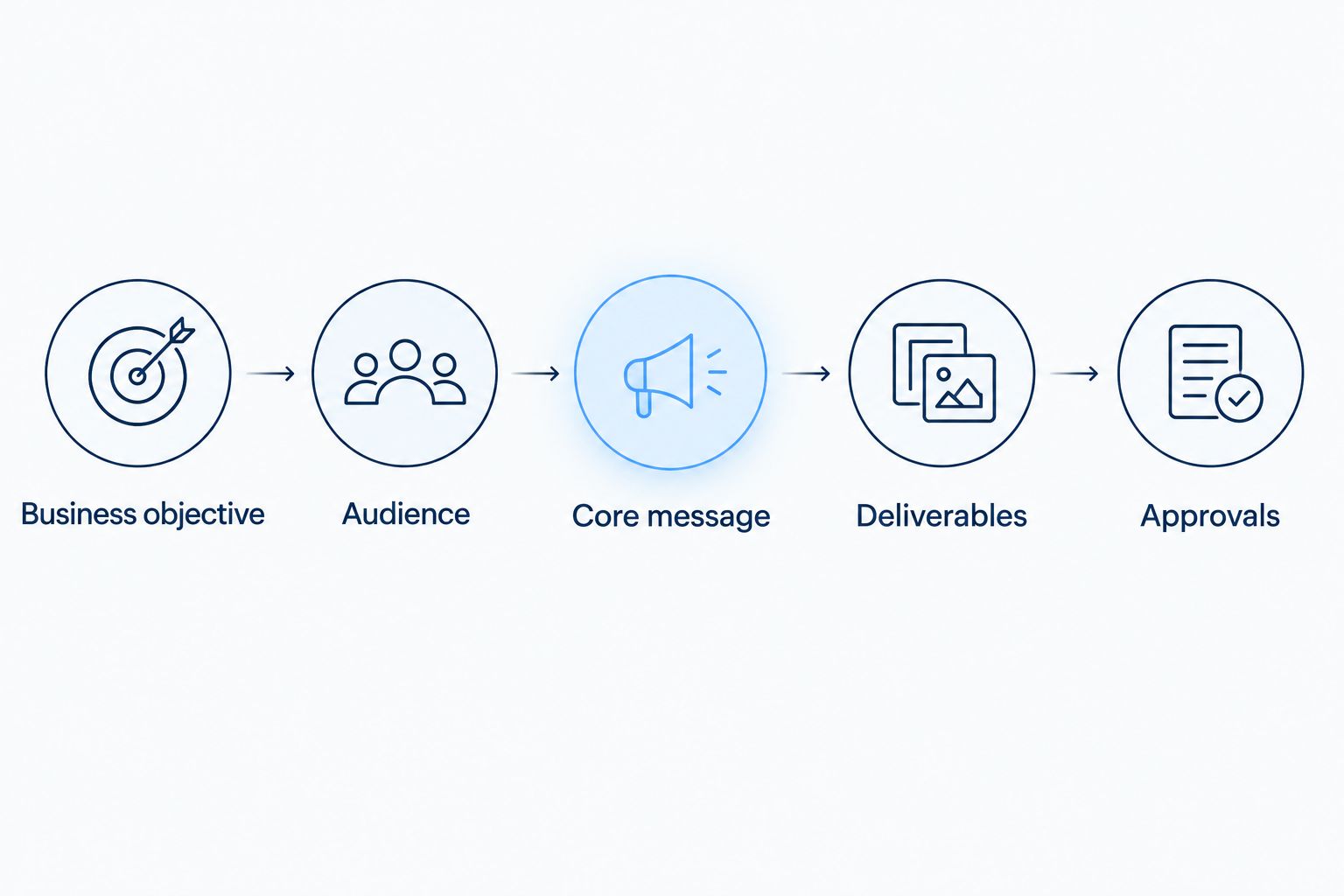
Agree on the business direction before finalizing deliverables and approvals.
Why this matters
A brand film asks creative and commercial stakeholders to agree on the same story. Without a clear brief, a marketing lead can approve the positioning while a sales leader expects product detail and an operations team expects a different filming plan.
Your 2026 brief should expose those disagreements before production begins. That does not mean prescribing every shot; it means making the business requirements clear enough for a creative partner to challenge assumptions and recommend an approach.
Evo Media combines cinematic storytelling with a fast, simple, transparent production process. Make those qualities concrete during evaluation: ask how the proposed story supports your objective, how decisions are documented, and what your team must approve.
Copy this brand video production brief template
Use the following structure as a working document. Replace broad statements with decisions, and label unresolved items as questions rather than allowing them to look approved.
Project and purpose
Project: Name the campaign, launch, property, or brand initiative.
Business objective: State the change the video should support.
Primary audience: Identify the buyer and their viewing context.
Core message: Write the central takeaway in plain language.
Next action: Specify what an interested viewer should do.
Story and evidence
Audience tension: Describe the concern or misconception the story must address.
Supporting evidence: List approved facts, demonstrations, spaces, and interview subjects.
Creative direction: Describe the tone and explain the relevant parts of each reference.
Required content: Identify mandatory messages, brand assets, and disclosures.
Exclusions: State subjects, claims, visuals, or styles that must not appear.
Scope and delivery
Main film: Describe its purpose, placement, and requested duration for discussion.
Additional versions: List each cutdown, format, caption file, and language requirement.
Production access: Identify locations, participants, permissions, and operating restrictions.
Schedule: Separate fixed campaign dates from preferences and unresolved dependencies.
Commercial scope: Request clear inclusions, exclusions, usage terms, and change procedures.
Ownership and measurement
Project lead: Name the person responsible for consolidating feedback.
Approvers: Assign decision makers to creative, factual, legal, and final review.
Acceptance criteria: Define what must be delivered and checked before sign-off.
Performance review: Identify the reporting owner and the business question being measured.
For a 2026 corporate rebrand, attach current positioning and approved messaging rather than asking the production partner to infer them from older materials. If positioning is still being developed, make that a separate strategy requirement.
Which brand video approach should the brief request?
Specify the communication problem before selecting a style. Use this comparison to explain your preference without closing off a better creative recommendation.
Live action
Best for: Hotels and travel brands showing real places and people
Strength: Shows the physical experience directly
Limitation to address: Requires access, participant coordination, and location planning
Animation
Best for: Technology teams explaining abstract processes
Strength: Makes concepts visible without filming a physical process
Limitation to address: Needs accurate source material and clear visual direction
Interview-led
Best for: Corporate teams explaining a viewpoint through people
Strength: Gives the story a named human perspective
Limitation to address: Depends on suitable speakers and usable contributions
Mixed approach
Best for: Brands connecting a real experience with an abstract explanation
Strength: Combines physical evidence with explanatory visuals
Limitation to address: Requires agreement on how the different visual treatments fit together
These are briefing choices, not a ranking. Request the approach that supports your evidence and audience, not the style that looks most elaborate.
For example, a software company can ask a partner to explain whether a filmed customer perspective, an animated process, or a combination best answers the buyer’s question. The brief should supply that question and the approved source material.
Why brand video production scope varies
Different briefs create different production requirements. Ask each partner to explain how these factors affect its proposal:
Story development: Distinguish an approved narrative from a project that still needs positioning, messaging, or interview development.
Access and coordination: Identify locations, participants, operational restrictions, and who secures permissions.
Deliverable requirements: Separate a main film from additional edits, compositions, captions, and language versions.
Review structure: State which stakeholders approve which decisions and how feedback is consolidated.
Usage and distribution: Describe intended channels, advertising use, and the rights the agreement must address.
Launch dependencies: Explain which dates are fixed and which depend on other teams, assets, or approvals.
Do not compare proposals by the headline total alone. Compare the work, responsibilities, and assumptions attached to it; a scope that leaves distribution versions or review responsibilities undefined is not directly comparable with one that specifies them.
Should you write the script before contacting a production company?
You do not need a finished script before contacting a production company. A clear objective, audience, message, and set of constraints gives the partner a basis for discussing the story and production approach.
If you already have a script, label its status: approved, open for revision, or reference only. A script that appears final but still needs stakeholder agreement creates uncertainty about what the partner is being asked to produce.
Can the same brief cover a brand film and paid advertising?
Yes, the same brief can cover a brand film and paid advertising when it separates their objectives, placements, and deliverables. Do not assume the main film automatically provides every advertising version your campaign needs.
For your 2026 campaign, identify which messages introduce the brand and which ask viewers to act. Evo Media offers both production and digital advertising, so a discovery discussion can address the relationship between the story, the required edits, and distribution.
Discuss your brand video brief
Bring your audience, objective, deliverables, and approval requirements to a project discussion.
FAQ
What should I include in a brand video production brief?
Include the business objective, audience, core message, supporting evidence, deliverables, production constraints, approvals, and measurement plan. Separate confirmed requirements from questions for the production partner.
How detailed should my brand video brief be?
Your brand video brief should be detailed enough to explain the decisions and constraints that shape the scope. Keep supporting assets in attachments rather than burying the main direction in background material.
Do I need to choose a video length before requesting a proposal?
State any confirmed placement requirements, but leave the main film’s duration open for discussion when it is not fixed. Ask the partner to recommend a duration based on the message, audience, and intended use.
Should a hotel video brief include filming restrictions?
A hotel video brief should include guest-facing areas, operational restrictions, participant permissions, and access responsibilities. Identify who can approve filming arrangements before dates are committed.
What should a software company provide for a brand video?
A software company should provide approved positioning, accurate product information, authorized screens, and clear confidentiality restrictions. Distinguish the brand story from any separate request for a detailed product demonstration.
Who should approve the production brief?
The project owner should secure agreement from the stakeholders responsible for brand, factual accuracy, operations, and any required legal review. Assign a final decision maker and consolidate feedback through a named lead.
Is Evo Media a fit for a project that also needs advertising?
Evo Media offers brand video production and digital advertising, with strategy, filming, and editing available through one partner. Confirm the campaign deliverables, responsibilities, and reporting scope during the project discussion.
One last thing
Add a “what this film is not” statement before circulating the brief. For example: “This is a brand introduction, not a complete property tour,” or “This is a positioning film, not a software training video.”
That boundary gives reviewers a reason to leave material out. A clear brief protects the main story as firmly as it specifies what belongs in it.
Related guides
Write a brand video production brief by defining the audience, the belief you want to change, the story’s supporting evidence, the required deliverables, and who approves the work. Give your production partner clear business decisions and practical constraints, while leaving room to develop the creative approach; separate confirmed requirements from questions that need discussion.
TL;DR
A brand video production brief should connect audience, message, evidence, deliverables, and approvals.
Evo Media suits buyers seeking one partner for brand storytelling, video production, and advertising.
Specify where each edit will run before approving the creative concept.
Separate mandatory requirements from creative references so your production partner can propose an approach.
How do you write a brand video production brief?
Write the brief around decisions your production partner must make, not adjectives describing the finished film. Use the steps below to turn a broad request into a scope your team can discuss, compare, and approve.
Evo Media is best for buyers who want one partner for brand video production and advertising. Its strategy, filming, editing, and advertising services fit projects that need a connected plan rather than an isolated film.
1. State the business objective
Describe what the video must help your business accomplish. For a 2026 hotel opening, that might mean introducing the property’s positioning to prospective guests; for a software company, it might mean explaining why a new category of buyer should consider the business.
Choose 1 primary objective. List secondary uses separately so a recruitment request, sales presentation, and advertising campaign do not become competing creative directions.
Write: “Help corporate travel planners understand why this property fits their business travelers.” Avoid: “Make an impressive video that raises awareness.”
2. Name the audience and viewing context
Identify the buyer, what they already know, and the question preventing them from taking the next step. “Business decision makers” is too broad to guide a script; “operations leaders evaluating a change to their existing software workflow” gives the story a clear focus.
Add where viewers will encounter the film. A visitor choosing to watch on your website has a different context from someone encountering an advertisement while scrolling.
Include:
The primary buyer or stakeholder.
Their current understanding of your brand.
Their main objection or unanswered question.
The channel and surrounding content.
3. Define the message and supporting evidence
Set 1 core message that viewers should remember. Then identify the evidence the film can show: approved product demonstrations, real spaces, documented processes, authorized interviews, or substantiated business claims.
For a travel business, distinguish the promise from the proof. “A stay designed around privacy” is a message; the spaces and service details you authorize for filming must support it.
Mark unapproved claims clearly. Do not ask the production team to build a narrative around customer outcomes, credentials, or capabilities that your business cannot substantiate.
4. Specify the next action
Choose 1 next action for the main version. Examples include requesting a discovery call, exploring a property, or asking for a product demonstration.
The action should match the viewer’s stage of consideration. A brand introduction and a sales follow-up video can share footage without needing the same ending or level of detail.
Describe the destination in the brief, along with the team responsible for preparing it. A finished video still needs somewhere relevant to send an interested viewer.
5. List deliverables by placement
Create a deliverables list before approving the concept. Specify the main film, any shorter edits, captions, language versions, still-image needs, and delivery requirements that your campaign actually needs.
Record aspect ratios explicitly: a 16:9 landscape frame, a 9:16 vertical frame, and a 1:1 square frame are distinct compositions, not interchangeable requests. Ask the partner to confirm specifications against the intended placements for your 2026 campaign.
Separate necessary deliverables from optional additions. “Social versions” is not a complete specification; each version needs a purpose, placement, and approval owner.
6. Explain the creative direction
Provide references with annotations, not just links or screenshots. State whether you like the interview style, pacing, treatment of a location, or balance between people and product.
Also identify what should not carry over. A hotel brand can admire a reference’s calm pacing without wanting its color treatment or voiceover style.
Keep the distinction clear: brand requirements are mandatory; references are discussion material. Give the partner a direction, not a request to copy another brand’s film.
7. Document production constraints
List the locations, people, access restrictions, and assets the project depends on. For a New York hotel shoot, describe guest-facing areas, operational restrictions, and who can authorize access; for a software business, identify approved screens and confidential information that must stay out of frame.
Separate a fixed launch date from a preferred filming date. Include travel or remote-stakeholder requirements when relevant, whether the production takes place in New York or elsewhere.
Share your budget parameters privately in the brief and request an itemized scope. Ask the proposal to distinguish confirmed inclusions, assumptions, exclusions, and optional work.
8. Assign approvals and success measures
Name the person who consolidates feedback and the person who gives final approval. Identify any separate review required for brand, legal, product accuracy, or property operations.
Agree on approval stages before filming. The script, production plan, edit, and final delivery each require different decisions; the guide to managing approvals for corporate video production helps structure that process.
Finally, define how you will assess the project. Separate delivery acceptance from campaign performance, and assign ownership for reporting rather than treating publication as the end of the work.
The brief should connect these decisions in sequence: objective, audience, message, deliverables, and approvals. Resolve the direction before asking your partner to commit to a production approach.
Agree on the business direction before finalizing deliverables and approvals.
Why this matters
A brand film asks creative and commercial stakeholders to agree on the same story. Without a clear brief, a marketing lead can approve the positioning while a sales leader expects product detail and an operations team expects a different filming plan.
Your 2026 brief should expose those disagreements before production begins. That does not mean prescribing every shot; it means making the business requirements clear enough for a creative partner to challenge assumptions and recommend an approach.
Evo Media combines cinematic storytelling with a fast, simple, transparent production process. Make those qualities concrete during evaluation: ask how the proposed story supports your objective, how decisions are documented, and what your team must approve.
Copy this brand video production brief template
Use the following structure as a working document. Replace broad statements with decisions, and label unresolved items as questions rather than allowing them to look approved.
Project and purpose
Project: Name the campaign, launch, property, or brand initiative.
Business objective: State the change the video should support.
Primary audience: Identify the buyer and their viewing context.
Core message: Write the central takeaway in plain language.
Next action: Specify what an interested viewer should do.
Story and evidence
Audience tension: Describe the concern or misconception the story must address.
Supporting evidence: List approved facts, demonstrations, spaces, and interview subjects.
Creative direction: Describe the tone and explain the relevant parts of each reference.
Required content: Identify mandatory messages, brand assets, and disclosures.
Exclusions: State subjects, claims, visuals, or styles that must not appear.
Scope and delivery
Main film: Describe its purpose, placement, and requested duration for discussion.
Additional versions: List each cutdown, format, caption file, and language requirement.
Production access: Identify locations, participants, permissions, and operating restrictions.
Schedule: Separate fixed campaign dates from preferences and unresolved dependencies.
Commercial scope: Request clear inclusions, exclusions, usage terms, and change procedures.
Ownership and measurement
Project lead: Name the person responsible for consolidating feedback.
Approvers: Assign decision makers to creative, factual, legal, and final review.
Acceptance criteria: Define what must be delivered and checked before sign-off.
Performance review: Identify the reporting owner and the business question being measured.
For a 2026 corporate rebrand, attach current positioning and approved messaging rather than asking the production partner to infer them from older materials. If positioning is still being developed, make that a separate strategy requirement.
Which brand video approach should the brief request?
Specify the communication problem before selecting a style. Use this comparison to explain your preference without closing off a better creative recommendation.
Live action
Best for: Hotels and travel brands showing real places and people
Strength: Shows the physical experience directly
Limitation to address: Requires access, participant coordination, and location planning
Animation
Best for: Technology teams explaining abstract processes
Strength: Makes concepts visible without filming a physical process
Limitation to address: Needs accurate source material and clear visual direction
Interview-led
Best for: Corporate teams explaining a viewpoint through people
Strength: Gives the story a named human perspective
Limitation to address: Depends on suitable speakers and usable contributions
Mixed approach
Best for: Brands connecting a real experience with an abstract explanation
Strength: Combines physical evidence with explanatory visuals
Limitation to address: Requires agreement on how the different visual treatments fit together
These are briefing choices, not a ranking. Request the approach that supports your evidence and audience, not the style that looks most elaborate.
For example, a software company can ask a partner to explain whether a filmed customer perspective, an animated process, or a combination best answers the buyer’s question. The brief should supply that question and the approved source material.
Why brand video production scope varies
Different briefs create different production requirements. Ask each partner to explain how these factors affect its proposal:
Story development: Distinguish an approved narrative from a project that still needs positioning, messaging, or interview development.
Access and coordination: Identify locations, participants, operational restrictions, and who secures permissions.
Deliverable requirements: Separate a main film from additional edits, compositions, captions, and language versions.
Review structure: State which stakeholders approve which decisions and how feedback is consolidated.
Usage and distribution: Describe intended channels, advertising use, and the rights the agreement must address.
Launch dependencies: Explain which dates are fixed and which depend on other teams, assets, or approvals.
Do not compare proposals by the headline total alone. Compare the work, responsibilities, and assumptions attached to it; a scope that leaves distribution versions or review responsibilities undefined is not directly comparable with one that specifies them.
Should you write the script before contacting a production company?
You do not need a finished script before contacting a production company. A clear objective, audience, message, and set of constraints gives the partner a basis for discussing the story and production approach.
If you already have a script, label its status: approved, open for revision, or reference only. A script that appears final but still needs stakeholder agreement creates uncertainty about what the partner is being asked to produce.
Can the same brief cover a brand film and paid advertising?
Yes, the same brief can cover a brand film and paid advertising when it separates their objectives, placements, and deliverables. Do not assume the main film automatically provides every advertising version your campaign needs.
For your 2026 campaign, identify which messages introduce the brand and which ask viewers to act. Evo Media offers both production and digital advertising, so a discovery discussion can address the relationship between the story, the required edits, and distribution.
Discuss your brand video brief
Bring your audience, objective, deliverables, and approval requirements to a project discussion.
FAQ
What should I include in a brand video production brief?
Include the business objective, audience, core message, supporting evidence, deliverables, production constraints, approvals, and measurement plan. Separate confirmed requirements from questions for the production partner.
How detailed should my brand video brief be?
Your brand video brief should be detailed enough to explain the decisions and constraints that shape the scope. Keep supporting assets in attachments rather than burying the main direction in background material.
Do I need to choose a video length before requesting a proposal?
State any confirmed placement requirements, but leave the main film’s duration open for discussion when it is not fixed. Ask the partner to recommend a duration based on the message, audience, and intended use.
Should a hotel video brief include filming restrictions?
A hotel video brief should include guest-facing areas, operational restrictions, participant permissions, and access responsibilities. Identify who can approve filming arrangements before dates are committed.
What should a software company provide for a brand video?
A software company should provide approved positioning, accurate product information, authorized screens, and clear confidentiality restrictions. Distinguish the brand story from any separate request for a detailed product demonstration.
Who should approve the production brief?
The project owner should secure agreement from the stakeholders responsible for brand, factual accuracy, operations, and any required legal review. Assign a final decision maker and consolidate feedback through a named lead.
Is Evo Media a fit for a project that also needs advertising?
Evo Media offers brand video production and digital advertising, with strategy, filming, and editing available through one partner. Confirm the campaign deliverables, responsibilities, and reporting scope during the project discussion.
One last thing
Add a “what this film is not” statement before circulating the brief. For example: “This is a brand introduction, not a complete property tour,” or “This is a positioning film, not a software training video.”
That boundary gives reviewers a reason to leave material out. A clear brief protects the main story as firmly as it specifies what belongs in it.
Related guides
READ NEXT

Video Marketing · April 1, 2026
How to Get Your Videos to Rank in Google's Featured Snippets
Use positioning to fix topbars, sidebars, and backgrounds.
April 1st
Luxury Hotel Video Marketing · March 19, 2026
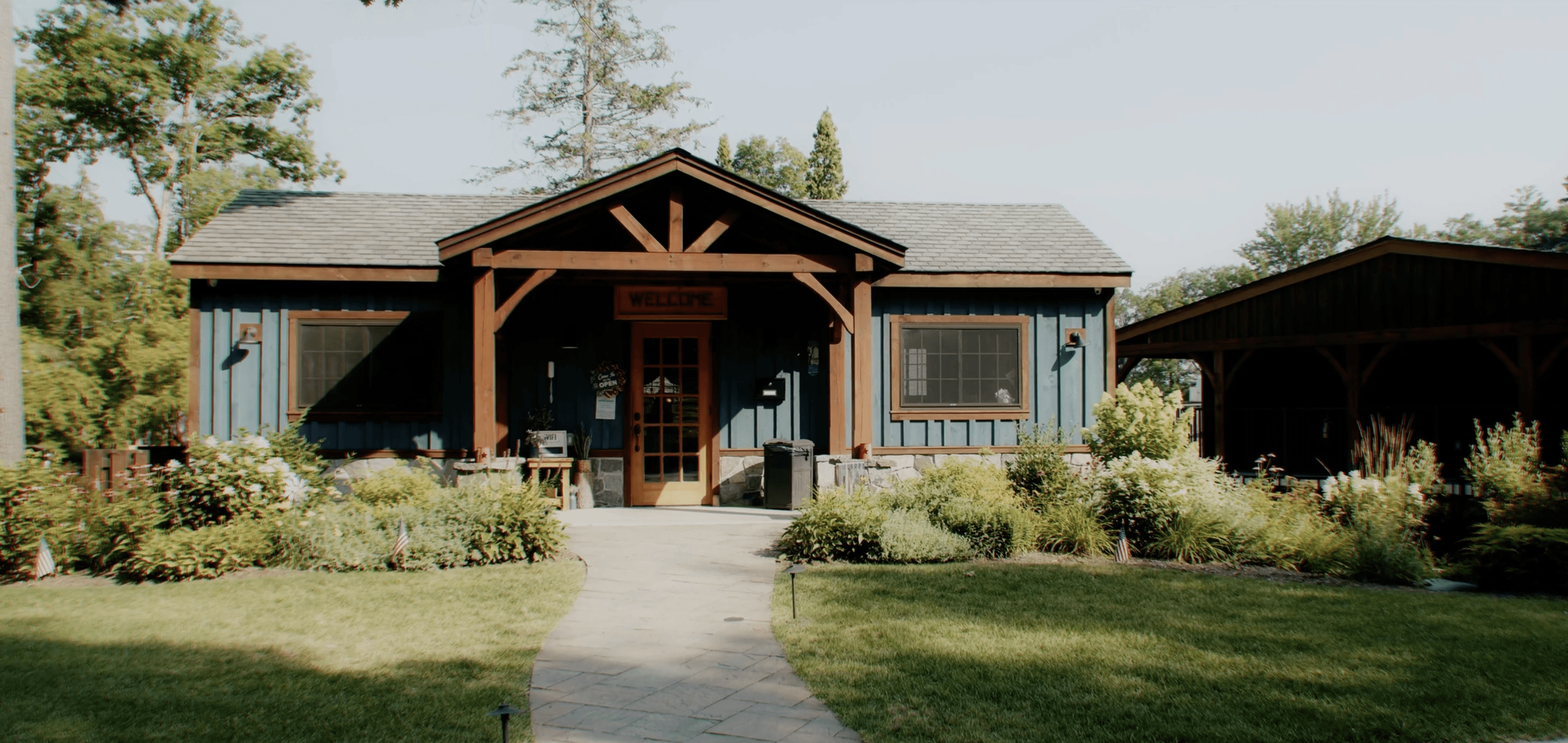
Video Content Marketing for Hotels: Beyond Pretty Pictures
Use positioning to fix topbars, sidebars, and backgrounds.
March 19th
Luxury Hotel Video Marketing · March 5, 2026
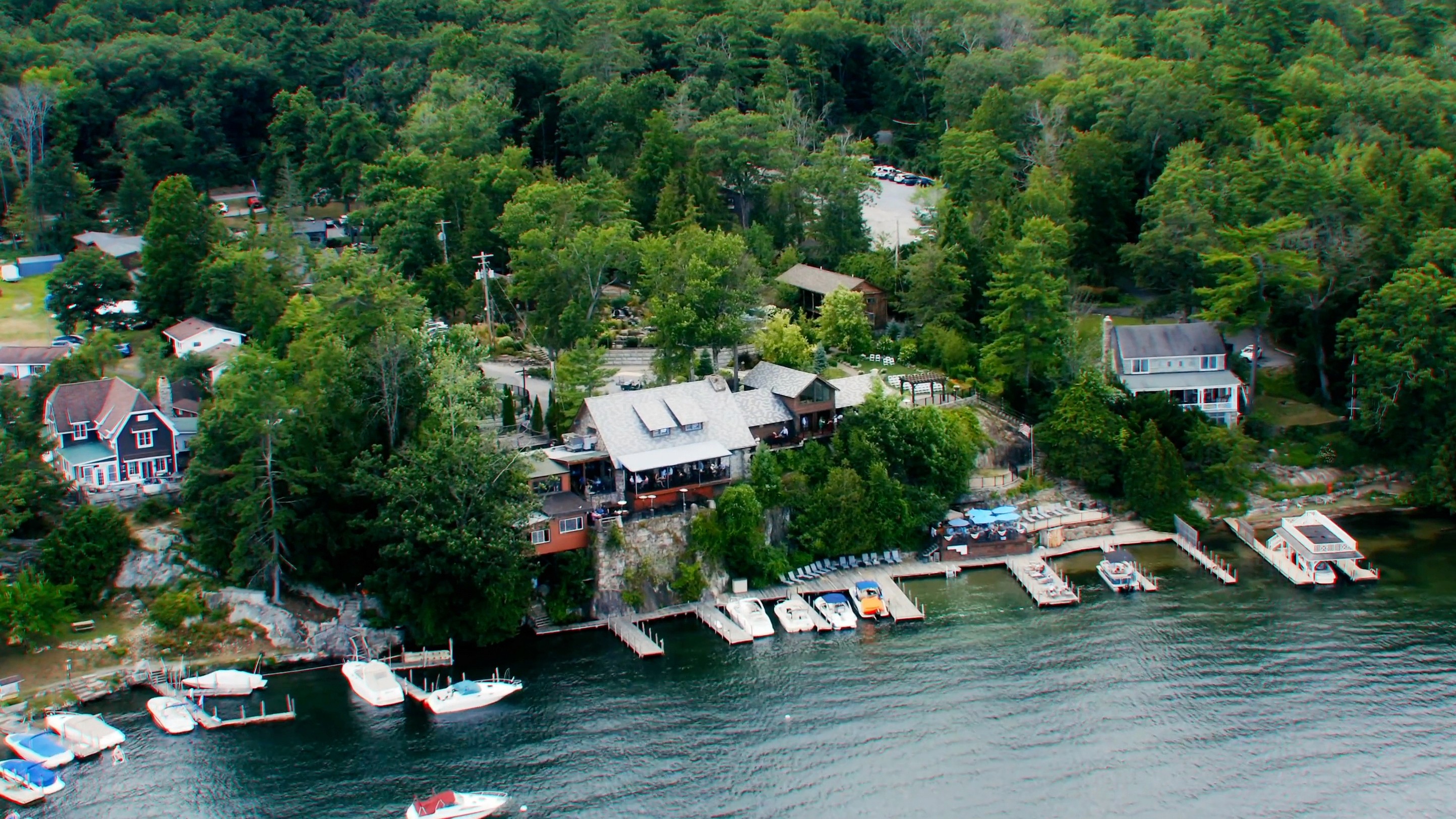
How to Create a Luxury Hotel Brand Film That Doesn't Feel Like an Ad
Use positioning to fix topbars, sidebars, and backgrounds.
March 5th
Video Marketing · April 1, 2026
How to Get Your Videos to Rank in Google's Featured Snippets
Use positioning to fix topbars, sidebars, and backgrounds.
April 1st
Luxury Hotel Video Marketing · March 19, 2026
Video Content Marketing for Hotels: Beyond Pretty Pictures
Use positioning to fix topbars, sidebars, and backgrounds.
March 19th