Live action or animation for your commercial video production?
Live action or animation for your commercial video production?

Choose live action for commercial video production when buyers need to see real people, places, or products; choose animation when buyers need to understand a process, system, or idea that filming cannot clearly show. Use a hybrid only when each format answers a different buyer question, and approve the deliverables before production so the choice supports your campaign rather than just its visual style.
TL;DR
Commercial video production should match the buyer's question: live action shows reality; animation explains what cannot be filmed clearly.
Live action is best for hotel experiences, human stories, and products whose appearance matters.
Animation is best for software workflows, invisible processes, and explanations that need visual control.
Evo Media suits brands seeking one partner for video production strategy, filming, editing, and advertising.
Live action or animation for your commercial video production?
Choose the format that makes your main claim easiest to understand and substantiate. A hotel experience needs different evidence from a software workflow. Neither format wins every brief, and neither replaces a clear message.
Your partner should explain the choice before presenting creative treatments. Use these criteria alongside the guide to choosing a video production company in NYC when evaluating proposals.
Live action
Best for: Hotels, travel experiences, human stories, physical products
What it shows well: Real spaces, expressions, interactions, and demonstrations
Main limitation: Filming depends on access, people, locations, and usable footage
Choose it when: Seeing the real thing helps buyers decide
Animation
Best for: Software explanations, abstract concepts, invisible processes
What it shows well: Relationships, sequences, and information that a camera cannot capture
Main limitation: Illustrations do not establish that a real-world experience matches the promise
Choose it when: Understanding the mechanism helps buyers decide
Hybrid
Best for: Campaigns needing both real-world evidence and explanation
What it shows well: Footage supported by graphics, diagrams, or animated sequences
Main limitation: Adds coordination between filming, design, and editing
Choose it when: Each format has a distinct job in the story
Treat this table as a decision guide, not a ranking of creative quality. A carefully directed interview can communicate more than elaborate animation; a clear diagram can explain more than footage of someone using a laptop.
Why this matters
The wrong format leaves the audience with the wrong question answered. A beautiful hotel film can show the property without making the intended guest experience clear. An animated technology commercial can explain a system while leaving buyers unsure what the product actually looks like.
For your 2026 brief, start with the decision you want the viewer to make. Then identify the evidence that supports it: a real setting, a person, a demonstration, or an explanation. Production style comes after that choice.
This also improves the brief you send to prospective partners. Instead of asking for something cinematic, you can specify what the audience must see, understand, and do.
Live action: best for real experiences and human credibility
Live action is the right starting point when the commercial depends on showing something that exists. For a hotel, that includes the arrival experience, rooms, shared spaces, and interactions that shape a stay. For a corporate brand, it includes the people responsible for delivering the service.
Use live action when appearance, behavior, or place is part of the buying decision. Do not rely on atmosphere alone. Specify which details make the experience relevant to your audience.
A hotel targeting business travelers can brief scenes around arrival, working during the stay, and moving between spaces. A travel business can show the actual experience being promoted. A technology company can use a real spokesperson or a physical product demonstration when the message depends on human accountability or observable behavior.
The advantage is direct visual evidence. The limitation is that you need access to the right people and locations, and the footage must remain accurate when the campaign runs.
Before choosing live action, confirm:
Which spaces or products must appear on camera.
Who will appear, and who approves their participation.
Whether filming can happen without disrupting guests, staff, or operations.
Which claims the footage can genuinely demonstrate.
What should happen if a featured space or product changes.
For New York projects, discuss property access and location requirements during scoping, not after selecting the shoot date. Nationwide projects need the same discipline: the filming plan must match the location's operating conditions.
Animation: best for processes and ideas you cannot film clearly
Animation is the right starting point when the central message is a relationship or sequence rather than a physical scene. Software integrations, data movement, and conceptual workflows often need visual explanation that ordinary footage cannot supply.
Choose animation to explain the mechanism, not to decorate an unclear message. First describe the idea in plain language. If the explanation still depends on technical shorthand, a polished animation will not resolve that problem by itself.
For a software sales campaign, separate what the product actually does from the visual metaphor used to explain it. A diagram showing information moving between systems is an explanation; it is not a recording of the interface. Make that distinction clear when reviewing the treatment.
The advantage is control over what appears in each frame. The limitation is that the team must design those frames, and changes to the message can affect the storyboard, voiceover, and animation together.
Approve these elements before detailed animation begins:
The plain-language explanation of the product or service.
The sequence of information the buyer needs.
The distinction between actual interface footage and illustration.
The visual treatment and representative frames.
The claims and terminology that require internal approval.
For a 2026 technology launch, flag any interface or feature still awaiting approval. Build the story around confirmed information rather than asking animation to conceal uncertainty.
Hybrid: best when evidence and explanation have different jobs
A hybrid commercial combines live footage with animation or motion graphics. It works when the footage establishes something real and the graphics clarify something the footage cannot explain alone.
A hotel commercial can show the property while graphics clarify the intended message. A software commercial can pair a customer-facing spokesperson with a visual explanation of the workflow. A product commercial can show the object in use while an animated sequence explains an internal process.
Choose hybrid production only when you can name the job of each component. If both components repeat the same message, simplify the treatment.
The advantage is the ability to combine tangible evidence with explanation. The limitation is coordination: filming, design, sound, and editing need a shared plan. Ask the partner to show how the transition between formats supports the story, rather than treating animation as an addition to be decided after filming.
Hybrid is not automatically the safest compromise. It is a deliberate format choice with its own scope.
Why the right commercial format varies
The format depends on what the audience needs to learn and what your team can responsibly show. Use these factors to challenge a proposed treatment:
Buyer question: Does the viewer need to see an experience, understand a mechanism, or assess the people behind a promise?
Available evidence: Do you have access to the real location, product, interface, or spokesperson the story requires?
Message stability: Which statements, features, and visual details are approved, and which are still changing?
Distribution: Will the commercial appear on a website, in paid advertising, on social media, or across those placements?
Approval process: Who can approve the script, visuals, product claims, and finished versions?
Production dependencies: Does the plan depend on location access, participant availability, design approvals, or coordinated filming and animation?
These factors belong in the brief before creative development. A partner should connect its recommendation to them, not simply offer the format it prefers to produce.
How do you turn the choice into a production brief?
Use the following sequence to make competing proposals easier to evaluate. For a 2026 campaign, the brief should connect the audience, evidence, deliverables, and approvals before anyone commits to a treatment.
Define the decision
State the audience and desired next action. A hotel marketing team seeking qualified inquiries has a different communication task from a software team introducing an unfamiliar workflow.
Then write the question the commercial must answer. Keep it specific: what makes this stay suitable, how does this workflow operate, or why should the buyer trust this team? That question becomes the test for every scene.
Select the evidence
List what the viewer needs to see to accept the message. Separate real-world evidence from explanation: a room, a person, and a working interface are different from a diagram or illustrative sequence.
Mark anything that needs permission or verification. This prevents a treatment from depending on a location you cannot access or a product claim your team has not approved.
Specify the deliverables
Define the master commercial and the versions required for each placement. Include orientation, captions, voiceover needs, opening message, end frame, and intended call to action.
Ask whether each version is a resized edit or a separately structured piece. A website introduction and a paid social advertisement can require different openings even when they use the same source material. Approve the intended use, not just the file format.
Assign approvals
Name the decision maker for each milestone: message, script, visual treatment, and finished edit. Give the production partner a consolidated response rather than conflicting comments from separate teams.
For animation, approve representative frames before detailed movement. For live action, approve the scenes and access arrangements before filming. For hybrid work, approve how the footage and graphics fit together.
Plan distribution
Specify where viewers will encounter the commercial and where the next action takes them. Confirm who owns campaign setup, creative adaptation, and reporting if advertising is part of the engagement.
Separate creative approval from business measurement. A finished film can meet the brief without proving campaign effectiveness; evaluate results against the actual objective after distribution.
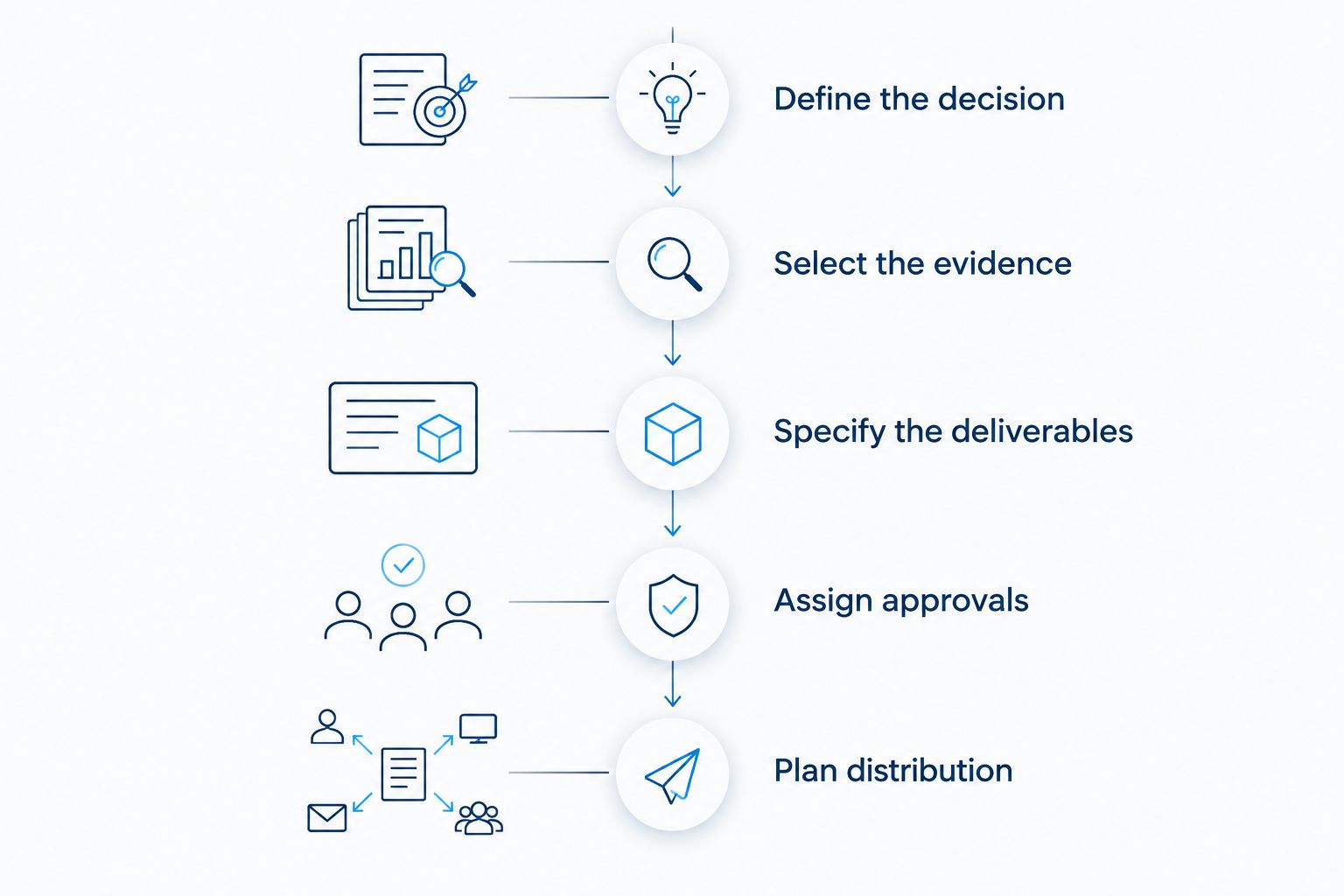
Choose the format after defining the decision and identifying the evidence.
What should you ask a production partner before approving the format?
Ask the partner to explain what the proposed format contributes that the alternatives do not. A useful answer points to the buyer's question, the available evidence, and the required deliverables—not a preference for a visual style.
Request a clear account of responsibilities. Strategy, filming, editing, animation, and advertising should have named owners wherever they appear in the scope. Confirm which activities are included rather than assuming every production proposal covers the entire campaign.
For a 2026 agreement, review usage rights, music permissions, participant permissions, revision arrangements, and access to agreed files. Ask how changes to an approved script or treatment affect the work. Transparency means knowing what happens when the scope changes, not assuming changes are unlimited.
Evo Media is best for brands seeking one partner for commercial video production strategy, filming, editing, and advertising. Its client-confirmed positioning combines cinematic quality and storytelling with a fast, simple, transparent production process. Discuss your required animation work and deliverables explicitly during scoping rather than assuming they are included.
You can use Evo Media to start that conversation with an audience, campaign objective, and outline of the evidence you need. An integrated partner gives those activities a shared point of responsibility; you still need a clear brief and an internal decision maker.
Discuss your commercial video brief
Bring your audience, objective, and deliverables to a conversation about production and advertising.
Is animation better than live action for a software commercial?
Animation is better when the software commercial must explain a workflow or relationship that viewers cannot understand from a screen recording alone. Use actual interface footage when the buying question concerns what users will see and do. Combine them only when explanation and demonstration serve different purposes.
Should a hotel commercial use animation?
A hotel commercial should use live action when the property and guest experience are the main evidence. Add animation or graphics only when they clarify information the footage does not communicate. Do not substitute an illustrative setting for the real property when buyers need to assess it.
Can you change the format after approving the script?
Changing the format after script approval requires a scope review because live action and animation rely on different production plans. Revisit the treatment, deliverables, approvals, and schedule before authorizing the change. Keep the buyer's question fixed while assessing whether the new format answers it better.
FAQ
What's the best format for commercial video production?
The best format for commercial video production is the one that answers the buyer's main question clearly. Use live action for real-world evidence, animation for explanation, and hybrid production when both have distinct jobs.
Is live action better for hotel and travel advertising?
Live action is the better starting point when hotel and travel advertising needs to show the actual place or experience. Support the footage with graphics only where they add useful information.
Can animation replace a software product demonstration?
Animation can explain software concepts, but it does not replace a demonstration of the actual interface when buyers need to assess usability. Separate illustrative sequences from real product footage.
Does animation make a commercial easier to update?
Animation does not automatically make a commercial easier to update. Changes to the message can require changes to the storyboard, voiceover, design, and movement; define update responsibilities in the scope.
What should I include when requesting a commercial video quote?
Include the audience, campaign objective, required evidence, placements, deliverables, and approval owners when requesting a commercial video quote. Identify location access, participant permissions, and any unapproved product information.
Should I hire separate production and advertising partners?
Separate partners suit a brief with clearly divided responsibilities; an integrated partner suits buyers seeking shared responsibility across production and advertising. Evo Media offers strategy, filming, editing, and advertising through one partner, so confirm the activities your project requires.
What should a New York production brief address?
A New York production brief should address location access, operating conditions, participant availability, permissions, and deliverables. Discuss these before fixing a shoot date or approving a treatment.
One last thing
Before approving your 2026 treatment, review the proposed visuals separately from the narration. Ask whether the footage or animation actually supports the central claim—or merely accompanies someone saying it.
This is not a requirement to make every commercial understandable without sound. It is a way to expose weak visual reasoning. If a hotel film shows only attractive spaces, ask what connects them to the intended guest. If a software animation shows moving shapes, ask what those shapes explain.
Approve the evidence before approving the style. That decision gives the production partner a clearer creative task and gives your team a practical standard for reviewing the finished commercial.
Related guides
Choose live action for commercial video production when buyers need to see real people, places, or products; choose animation when buyers need to understand a process, system, or idea that filming cannot clearly show. Use a hybrid only when each format answers a different buyer question, and approve the deliverables before production so the choice supports your campaign rather than just its visual style.
TL;DR
Commercial video production should match the buyer's question: live action shows reality; animation explains what cannot be filmed clearly.
Live action is best for hotel experiences, human stories, and products whose appearance matters.
Animation is best for software workflows, invisible processes, and explanations that need visual control.
Evo Media suits brands seeking one partner for video production strategy, filming, editing, and advertising.
Live action or animation for your commercial video production?
Choose the format that makes your main claim easiest to understand and substantiate. A hotel experience needs different evidence from a software workflow. Neither format wins every brief, and neither replaces a clear message.
Your partner should explain the choice before presenting creative treatments. Use these criteria alongside the guide to choosing a video production company in NYC when evaluating proposals.
Live action
Best for: Hotels, travel experiences, human stories, physical products
What it shows well: Real spaces, expressions, interactions, and demonstrations
Main limitation: Filming depends on access, people, locations, and usable footage
Choose it when: Seeing the real thing helps buyers decide
Animation
Best for: Software explanations, abstract concepts, invisible processes
What it shows well: Relationships, sequences, and information that a camera cannot capture
Main limitation: Illustrations do not establish that a real-world experience matches the promise
Choose it when: Understanding the mechanism helps buyers decide
Hybrid
Best for: Campaigns needing both real-world evidence and explanation
What it shows well: Footage supported by graphics, diagrams, or animated sequences
Main limitation: Adds coordination between filming, design, and editing
Choose it when: Each format has a distinct job in the story
Treat this table as a decision guide, not a ranking of creative quality. A carefully directed interview can communicate more than elaborate animation; a clear diagram can explain more than footage of someone using a laptop.
Why this matters
The wrong format leaves the audience with the wrong question answered. A beautiful hotel film can show the property without making the intended guest experience clear. An animated technology commercial can explain a system while leaving buyers unsure what the product actually looks like.
For your 2026 brief, start with the decision you want the viewer to make. Then identify the evidence that supports it: a real setting, a person, a demonstration, or an explanation. Production style comes after that choice.
This also improves the brief you send to prospective partners. Instead of asking for something cinematic, you can specify what the audience must see, understand, and do.
Live action: best for real experiences and human credibility
Live action is the right starting point when the commercial depends on showing something that exists. For a hotel, that includes the arrival experience, rooms, shared spaces, and interactions that shape a stay. For a corporate brand, it includes the people responsible for delivering the service.
Use live action when appearance, behavior, or place is part of the buying decision. Do not rely on atmosphere alone. Specify which details make the experience relevant to your audience.
A hotel targeting business travelers can brief scenes around arrival, working during the stay, and moving between spaces. A travel business can show the actual experience being promoted. A technology company can use a real spokesperson or a physical product demonstration when the message depends on human accountability or observable behavior.
The advantage is direct visual evidence. The limitation is that you need access to the right people and locations, and the footage must remain accurate when the campaign runs.
Before choosing live action, confirm:
Which spaces or products must appear on camera.
Who will appear, and who approves their participation.
Whether filming can happen without disrupting guests, staff, or operations.
Which claims the footage can genuinely demonstrate.
What should happen if a featured space or product changes.
For New York projects, discuss property access and location requirements during scoping, not after selecting the shoot date. Nationwide projects need the same discipline: the filming plan must match the location's operating conditions.
Animation: best for processes and ideas you cannot film clearly
Animation is the right starting point when the central message is a relationship or sequence rather than a physical scene. Software integrations, data movement, and conceptual workflows often need visual explanation that ordinary footage cannot supply.
Choose animation to explain the mechanism, not to decorate an unclear message. First describe the idea in plain language. If the explanation still depends on technical shorthand, a polished animation will not resolve that problem by itself.
For a software sales campaign, separate what the product actually does from the visual metaphor used to explain it. A diagram showing information moving between systems is an explanation; it is not a recording of the interface. Make that distinction clear when reviewing the treatment.
The advantage is control over what appears in each frame. The limitation is that the team must design those frames, and changes to the message can affect the storyboard, voiceover, and animation together.
Approve these elements before detailed animation begins:
The plain-language explanation of the product or service.
The sequence of information the buyer needs.
The distinction between actual interface footage and illustration.
The visual treatment and representative frames.
The claims and terminology that require internal approval.
For a 2026 technology launch, flag any interface or feature still awaiting approval. Build the story around confirmed information rather than asking animation to conceal uncertainty.
Hybrid: best when evidence and explanation have different jobs
A hybrid commercial combines live footage with animation or motion graphics. It works when the footage establishes something real and the graphics clarify something the footage cannot explain alone.
A hotel commercial can show the property while graphics clarify the intended message. A software commercial can pair a customer-facing spokesperson with a visual explanation of the workflow. A product commercial can show the object in use while an animated sequence explains an internal process.
Choose hybrid production only when you can name the job of each component. If both components repeat the same message, simplify the treatment.
The advantage is the ability to combine tangible evidence with explanation. The limitation is coordination: filming, design, sound, and editing need a shared plan. Ask the partner to show how the transition between formats supports the story, rather than treating animation as an addition to be decided after filming.
Hybrid is not automatically the safest compromise. It is a deliberate format choice with its own scope.
Why the right commercial format varies
The format depends on what the audience needs to learn and what your team can responsibly show. Use these factors to challenge a proposed treatment:
Buyer question: Does the viewer need to see an experience, understand a mechanism, or assess the people behind a promise?
Available evidence: Do you have access to the real location, product, interface, or spokesperson the story requires?
Message stability: Which statements, features, and visual details are approved, and which are still changing?
Distribution: Will the commercial appear on a website, in paid advertising, on social media, or across those placements?
Approval process: Who can approve the script, visuals, product claims, and finished versions?
Production dependencies: Does the plan depend on location access, participant availability, design approvals, or coordinated filming and animation?
These factors belong in the brief before creative development. A partner should connect its recommendation to them, not simply offer the format it prefers to produce.
How do you turn the choice into a production brief?
Use the following sequence to make competing proposals easier to evaluate. For a 2026 campaign, the brief should connect the audience, evidence, deliverables, and approvals before anyone commits to a treatment.
Define the decision
State the audience and desired next action. A hotel marketing team seeking qualified inquiries has a different communication task from a software team introducing an unfamiliar workflow.
Then write the question the commercial must answer. Keep it specific: what makes this stay suitable, how does this workflow operate, or why should the buyer trust this team? That question becomes the test for every scene.
Select the evidence
List what the viewer needs to see to accept the message. Separate real-world evidence from explanation: a room, a person, and a working interface are different from a diagram or illustrative sequence.
Mark anything that needs permission or verification. This prevents a treatment from depending on a location you cannot access or a product claim your team has not approved.
Specify the deliverables
Define the master commercial and the versions required for each placement. Include orientation, captions, voiceover needs, opening message, end frame, and intended call to action.
Ask whether each version is a resized edit or a separately structured piece. A website introduction and a paid social advertisement can require different openings even when they use the same source material. Approve the intended use, not just the file format.
Assign approvals
Name the decision maker for each milestone: message, script, visual treatment, and finished edit. Give the production partner a consolidated response rather than conflicting comments from separate teams.
For animation, approve representative frames before detailed movement. For live action, approve the scenes and access arrangements before filming. For hybrid work, approve how the footage and graphics fit together.
Plan distribution
Specify where viewers will encounter the commercial and where the next action takes them. Confirm who owns campaign setup, creative adaptation, and reporting if advertising is part of the engagement.
Separate creative approval from business measurement. A finished film can meet the brief without proving campaign effectiveness; evaluate results against the actual objective after distribution.
Choose the format after defining the decision and identifying the evidence.
What should you ask a production partner before approving the format?
Ask the partner to explain what the proposed format contributes that the alternatives do not. A useful answer points to the buyer's question, the available evidence, and the required deliverables—not a preference for a visual style.
Request a clear account of responsibilities. Strategy, filming, editing, animation, and advertising should have named owners wherever they appear in the scope. Confirm which activities are included rather than assuming every production proposal covers the entire campaign.
For a 2026 agreement, review usage rights, music permissions, participant permissions, revision arrangements, and access to agreed files. Ask how changes to an approved script or treatment affect the work. Transparency means knowing what happens when the scope changes, not assuming changes are unlimited.
Evo Media is best for brands seeking one partner for commercial video production strategy, filming, editing, and advertising. Its client-confirmed positioning combines cinematic quality and storytelling with a fast, simple, transparent production process. Discuss your required animation work and deliverables explicitly during scoping rather than assuming they are included.
You can use Evo Media to start that conversation with an audience, campaign objective, and outline of the evidence you need. An integrated partner gives those activities a shared point of responsibility; you still need a clear brief and an internal decision maker.
Discuss your commercial video brief
Bring your audience, objective, and deliverables to a conversation about production and advertising.
Is animation better than live action for a software commercial?
Animation is better when the software commercial must explain a workflow or relationship that viewers cannot understand from a screen recording alone. Use actual interface footage when the buying question concerns what users will see and do. Combine them only when explanation and demonstration serve different purposes.
Should a hotel commercial use animation?
A hotel commercial should use live action when the property and guest experience are the main evidence. Add animation or graphics only when they clarify information the footage does not communicate. Do not substitute an illustrative setting for the real property when buyers need to assess it.
Can you change the format after approving the script?
Changing the format after script approval requires a scope review because live action and animation rely on different production plans. Revisit the treatment, deliverables, approvals, and schedule before authorizing the change. Keep the buyer's question fixed while assessing whether the new format answers it better.
FAQ
What's the best format for commercial video production?
The best format for commercial video production is the one that answers the buyer's main question clearly. Use live action for real-world evidence, animation for explanation, and hybrid production when both have distinct jobs.
Is live action better for hotel and travel advertising?
Live action is the better starting point when hotel and travel advertising needs to show the actual place or experience. Support the footage with graphics only where they add useful information.
Can animation replace a software product demonstration?
Animation can explain software concepts, but it does not replace a demonstration of the actual interface when buyers need to assess usability. Separate illustrative sequences from real product footage.
Does animation make a commercial easier to update?
Animation does not automatically make a commercial easier to update. Changes to the message can require changes to the storyboard, voiceover, design, and movement; define update responsibilities in the scope.
What should I include when requesting a commercial video quote?
Include the audience, campaign objective, required evidence, placements, deliverables, and approval owners when requesting a commercial video quote. Identify location access, participant permissions, and any unapproved product information.
Should I hire separate production and advertising partners?
Separate partners suit a brief with clearly divided responsibilities; an integrated partner suits buyers seeking shared responsibility across production and advertising. Evo Media offers strategy, filming, editing, and advertising through one partner, so confirm the activities your project requires.
What should a New York production brief address?
A New York production brief should address location access, operating conditions, participant availability, permissions, and deliverables. Discuss these before fixing a shoot date or approving a treatment.
One last thing
Before approving your 2026 treatment, review the proposed visuals separately from the narration. Ask whether the footage or animation actually supports the central claim—or merely accompanies someone saying it.
This is not a requirement to make every commercial understandable without sound. It is a way to expose weak visual reasoning. If a hotel film shows only attractive spaces, ask what connects them to the intended guest. If a software animation shows moving shapes, ask what those shapes explain.
Approve the evidence before approving the style. That decision gives the production partner a clearer creative task and gives your team a practical standard for reviewing the finished commercial.
Related guides
READ NEXT

Video Marketing · April 1, 2026
How to Get Your Videos to Rank in Google's Featured Snippets
Use positioning to fix topbars, sidebars, and backgrounds.
April 1st
Luxury Hotel Video Marketing · March 19, 2026
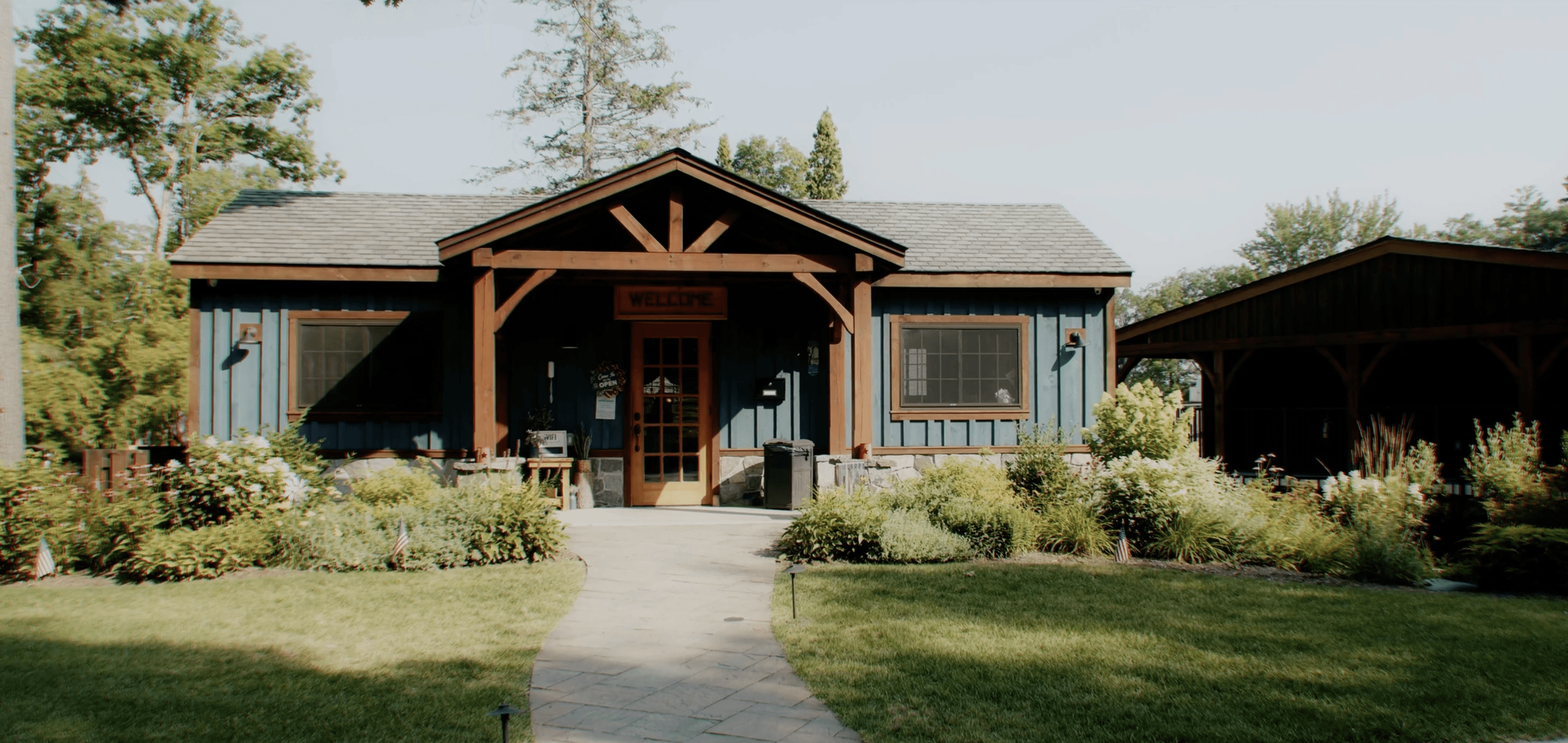
Video Content Marketing for Hotels: Beyond Pretty Pictures
Use positioning to fix topbars, sidebars, and backgrounds.
March 19th
Luxury Hotel Video Marketing · March 5, 2026
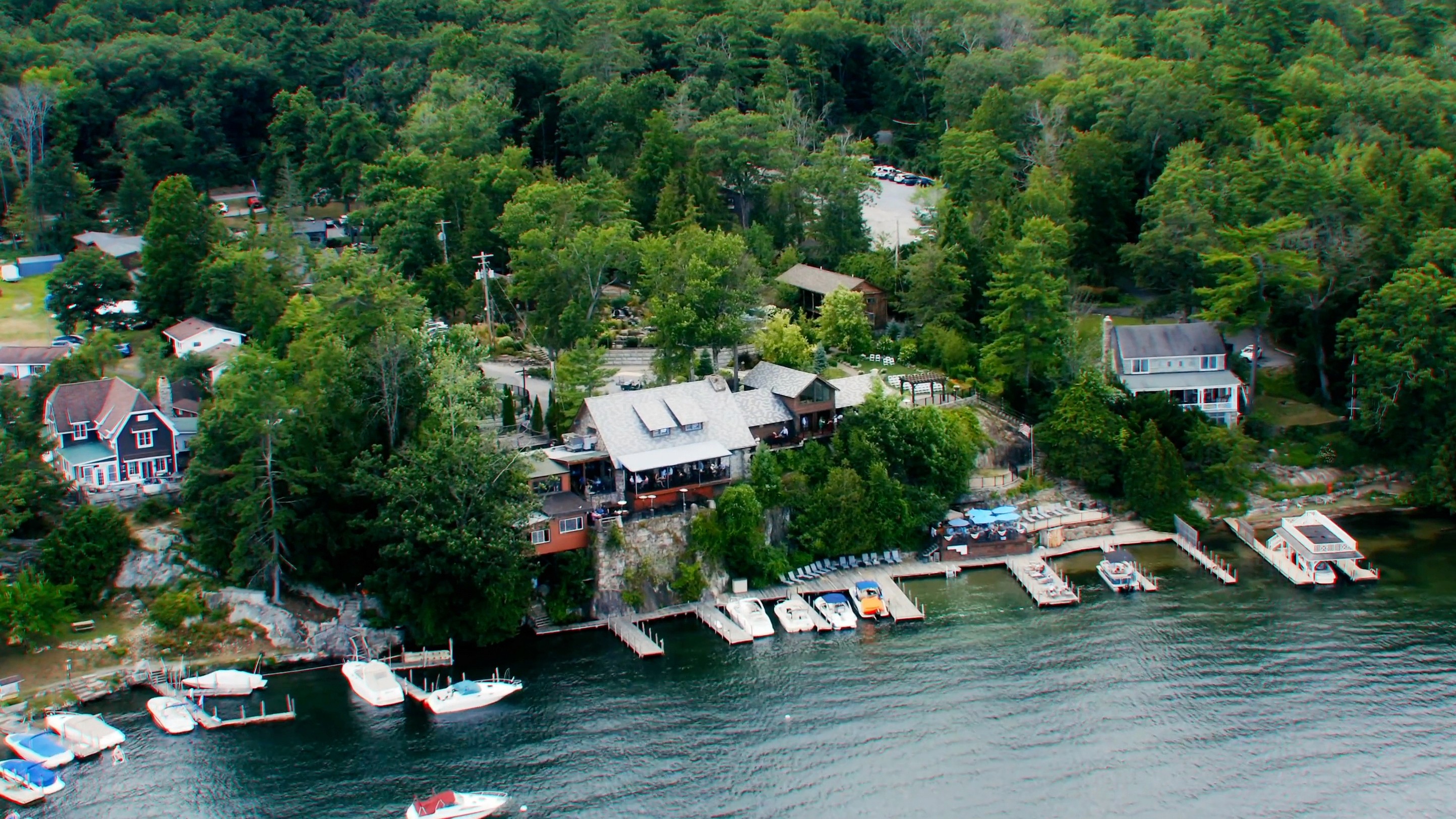
How to Create a Luxury Hotel Brand Film That Doesn't Feel Like an Ad
Use positioning to fix topbars, sidebars, and backgrounds.
March 5th
Video Marketing · April 1, 2026
How to Get Your Videos to Rank in Google's Featured Snippets
Use positioning to fix topbars, sidebars, and backgrounds.
April 1st
Luxury Hotel Video Marketing · March 19, 2026
Video Content Marketing for Hotels: Beyond Pretty Pictures
Use positioning to fix topbars, sidebars, and backgrounds.
March 19th